
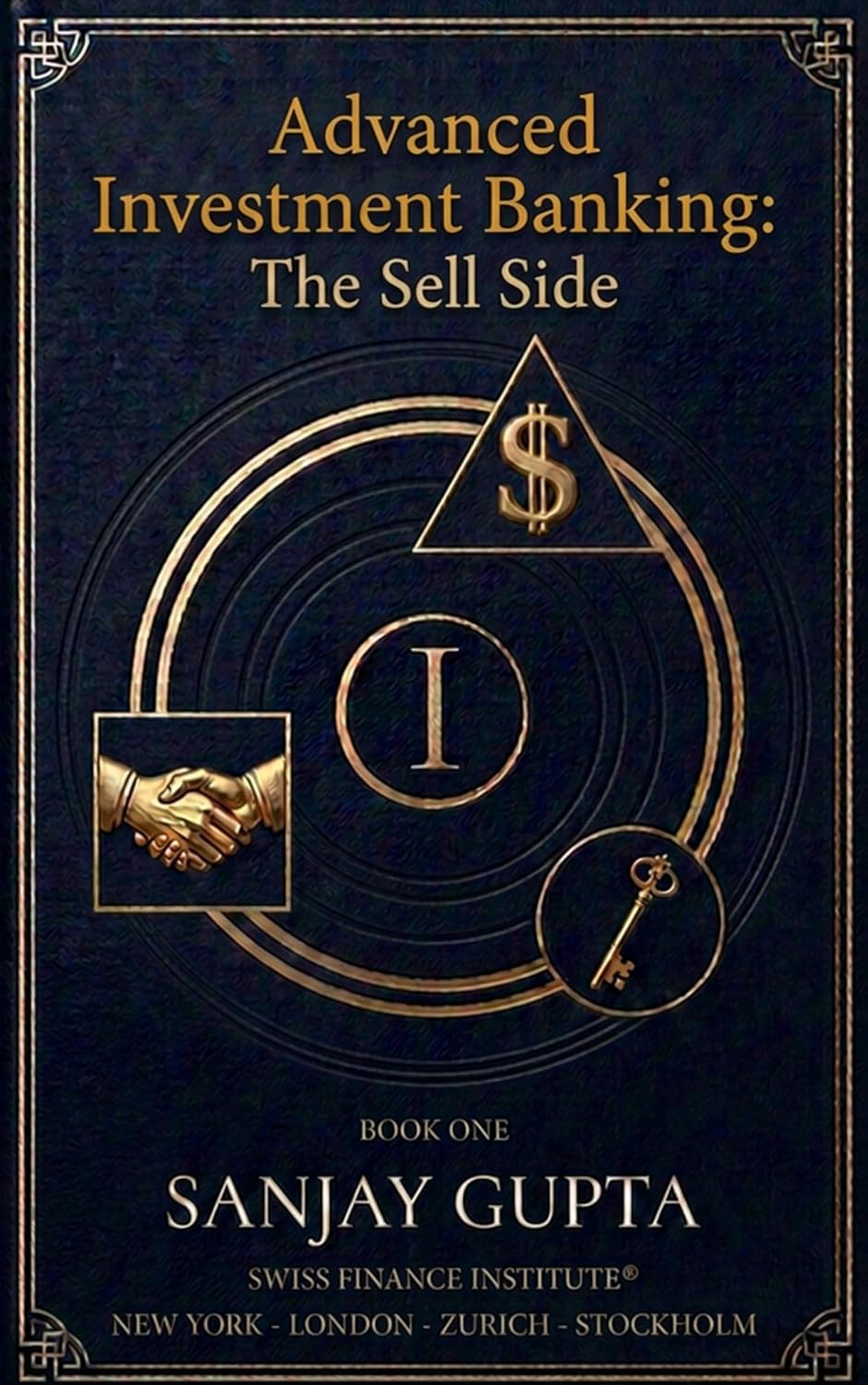
Private Equity and Advanced Investment Banking: The Sell Side
Every guide tells you what an analyst does. This one shows you how the decisions actually get made.
It is 2:14 in the morning. A twenty-four-year-old analyst has fourteen comparable companies on her screen, a pitch at seven, and a vice president who wants the number to land higher. The most accurate comparable on the page costs the client twenty-three million dollars.
What she does next is the job — and no recruiting session will ever describe it to you.
Read this before you take the seat, so you know what you are trading and what you are getting.
The Mechanics Behind the Decisions
Book One covers the sell side: how companies are valued, marketed, and sold. Each chapter puts you at the desk, then stops and teaches the mechanics behind what you just watched. Real emails. Real models. Real hours.
How a Comps Set Is Built
And how quietly it can be shaped. The selection, the exclusions, the adjustments — and what each one does to the number.
How a Footnote Moves a Valuation
Where value actually lives in a model, and the small places where a large answer gets decided.
LBO Models, Debt Schedules, Credit Committees
How they really work: the mechanics, the sequence, and the people who say yes or no.
How a Mandate Is Won
The pitch, the positioning, and the process by which a bank ends up on the cover of the deal.
What a Managing Director Sees in Thirty Seconds
The signals senior bankers read instantly — in a page, in a model, in an analyst.
Why the Analyst Who Thinks Gets Asked to Stay
And why the one who only executes fills a seat for two years. The difference, taught explicitly.
At the Desk, Then the Mechanics
Most finance books explain the technique and leave you to imagine the room. This one reverses the order. You are put in the room first — the screen, the deadline, the person who wants a different number — and only then does the chapter stop and teach the mechanics of what you just watched.
The result is that the technique arrives with its context attached: not just how to build the model, but why it is being built, who will read it, what they will look for, and what happens when the honest answer is inconvenient.
What You Are Trading, and What You Are Getting
The book is also honest about the trade. The hours are not exaggerated. The hierarchy is not a metaphor. The distance between what you contribute and what you are credited for is not a phase you grow out of — it is the business model.
That candour is the point. Readers who understand the terms of the seat before they take it make better decisions in it, and about it.
Written for the People About to Take the Seat
Students
Undergraduates and graduate students who want to know what investment banking actually is before they commit to it.
Recent Graduates
Incoming and first-year analysts who want to walk in already understanding what the desk expects.
Career Changers
Professionals crossing into high finance from engineering, law, technology, or elsewhere, who need the mechanics and the culture at once.
Residency Candidates
Anyone preparing for Swiss Finance Institute’s Residency. The book and the program share a conviction: you learn the work by seeing how it is actually done.
Two Books. Both Sides of the Table.
The Sell Side
How companies are valued, marketed, and sold: comparables, footnotes, LBO models, debt schedules, credit committees, mandates, and the people who run them. Available now.
The Buy Side
Book Two crosses the table to private equity — the buyer’s side of everything Book One teaches you to sell.
498 pages
A full-length treatment, not a primer.
Kindle and paperback
Both editions are sold on Amazon.
Real materials
Real emails, real models, real hours — the working documents of the job.
Know the Job Before You Take It.
Private Equity and Advanced Investment Banking: The Sell Side is available now in Kindle and paperback editions.